
How Social Media Separates Us (And Why Satan Loves It)
One of the greatest ways Satan gets to us is through separation.
He loves separation—because while God does His best work in relationship and community (which is precisely why He created a mate for Adam), Satan does his best work when we are isolated. Alone. Disconnected.
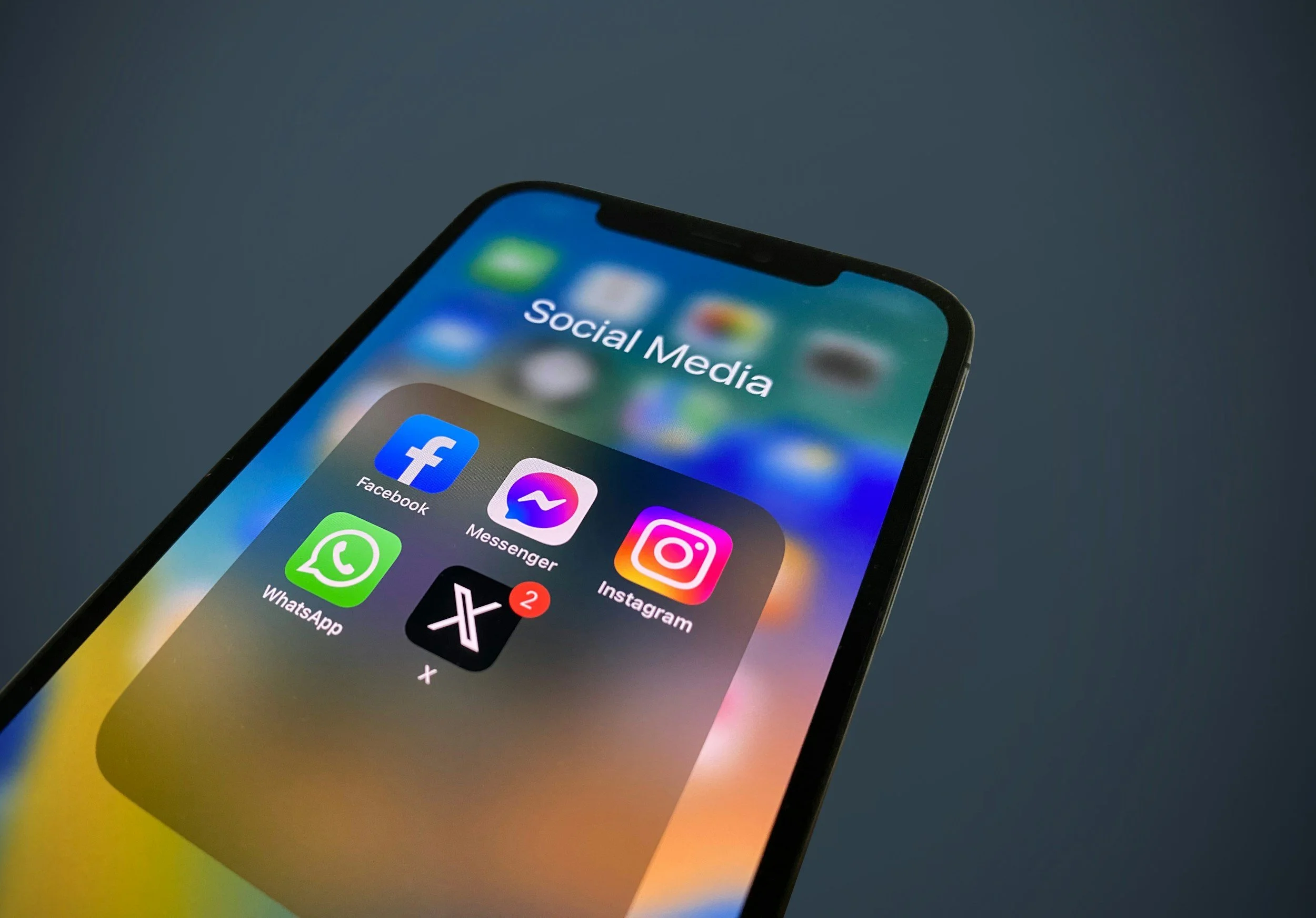
Ironically, many of the things designed to connect us have been proven to do the opposite. Social media is the clearest example I can think of.
Platforms like Facebook, TikTok, Instagram, and even dating apps were created to bring people together. And in many ways, they have. I’ve made good friends through Instagram that I never would have met otherwise. I’ve stayed connected to people from high school I would’ve lost touch with. I know couples who met their spouse through dating apps. We’ve used TikTok Fridays at work to connect through laughter and games. Some of the best quotes I’ve saved came from Instagram. Teachers find endless crafts on Pinterest. TikTok, Instagram, and Pinterest have given me great recipes. We’ve discovered new restaurants, communities, events, causes, and businesses to support.
Social media has done good.
But it has also separated us—deeply.
In general, people are less satisfied and less happy than they were before social media existed. Studies consistently show that increased social media use is linked to decreased life satisfaction, higher rates of depression and anxiety, and increased loneliness—often due to comparison and fear of missing out. Before social media, happiness was more often rooted in face-to-face relationships and slower, more meaningful communication. While social media can offer connection, it requires intentional and mindful use to avoid harming our mental health and overall well-being.
So why is this happening—when these platforms were meant to connect us?
One thing I find fascinating is how wildly different our feeds can be.
This week, a man was murdered—assassinated, really. A coworker and I both saw content about it on TikTok, but what we were shown could not have been more different. She didn’t see a single video describing him as a good person. I didn’t see a single video saying he wasn’t.
My “For You” page has been carefully curated by TikTok to show me what it believes I want to see. And as a white woman of a certain age, social class, profession, and religion, TikTok has decided that I want content portraying this man as good and his death as tragic. Shay’s feed—curated based on her own demographics and behavior—showed content portraying him as harmful and responsible for his own demise.
And while we are capable of thinking for ourselves, repetition matters. When we see the same types of videos over and over—same creators, same opinions, same framing—we stop being exposed to other perspectives. Even if we’d like to see them. The algorithm doesn’t show us what broadens us; it shows us what keeps us scrolling.
Every month or so, a group of women from work and I go to brunch. I’m the only white woman in the group, which I love. Often, we’re in a restaurant where I’m also the only white person there. That doesn’t bother me—but it always makes me wonder: how does a restaurant become so segregated?
They aren’t advertising that way. Their menus and websites don’t indicate they’re geared toward a specific race. And yet, there we are—clearly divided.
How does that happen in 2025?
Well, my phone, my computer, my email, my workplace systems, the DMV, the IRS, and nearly every website I’ve ever used knows my age, race, gender, and background. They decide what I see. So when I search “brunch spots in Atlanta” on TikTok, I’m shown something very different than when LaToya searches the same thing. Even though we’re both women in our 40s, both single, both in childcare—our feeds are worlds apart.
Social media can connect us—but it can also keep us separated. Exactly the way Satan likes it.
Because the wider the gap, the more room there is for misunderstanding, jealousy, resentment, fear, and an “us vs. them” mentality. Satan is thrilled that we’re more connected than ever—and yet lonelier than ever. He uses algorithms to keep us sad, angry, divided, and isolated.
And yes—God still uses all things for the good of those who love Him. That’s why there is so much good online. But make no mistake: Satan is working too.
So what do we do when we have hundreds of online “friends” but still feel lonely?
What do we do when we scroll more than we connect?
When “liking” a post feels like staying in touch?
When our FYP shows only one side of every issue?
When we zoom in on a high school friend’s photo to see if they look better—or worse—than us?
When we can’t even watch a one-minute video from someone we care about because our attention span is shot?
I don’t have all the answers. But I know the first step is noticing.
For me, the signal is loneliness.
I’m almost never lonely at work—not just because I’m busy, but because I’m connected. I talk with coworkers. We laugh, cry, pray, and show up for one another. I feel connected to the kids. It’s real.
But outside of that? I often feel lonely.
Loneliness isn’t bad—it’s a signal. It tells me something needs to change. It reminds me that liking an Instagram story, commenting on Facebook, filming a TikTok, or even texting isn’t always real connection.
I’m connected at work because I invest time there. And that makes me examine something else: my connection to God.
Because in the absence of that connection, Satan thrives.
The less connected I am to God, the more drawn I am to things that give quick dopamine hits but never satisfy. And those things are usually the very things that keep me from Him. It’s cyclical.
When I’m connected to God—through prayer, worship, and His Word—I have less appetite for the things that isolate me. And in connecting with Him, He teaches me how to connect with others. He brings people to mind. He prompts me to reach out. He gives me His time, which makes me want to give my time. He fills me so I don’t feel depleted. He gives me thoughts that become words I share with you each week.
Jesus is the answer, y’all.
To everything.
Keep Reading
If this resonated, you might also enjoy:
→ Funny the Way it Is – learning empathy where I least expected it
→ Curiosity as a Wall – the subtle ways we protect ourselves from real connection
→ Faith – choosing trust and tenderness in a noisy world
