
Showing Up
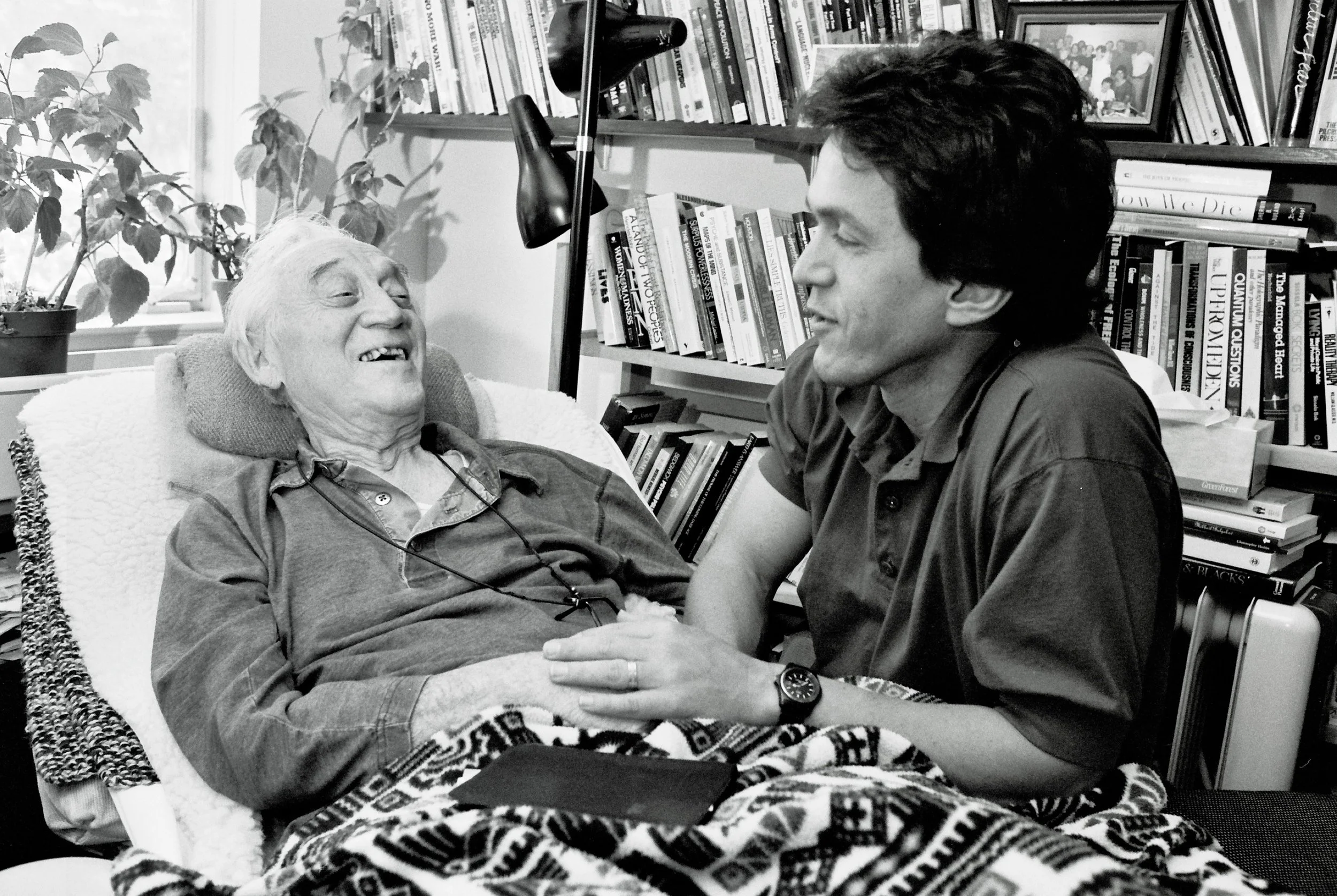
I just finished reading Tuesdays with Morrie. It is my favorite book of all time. It’s the book that made me fall in love with reading. It’s a short read—you could easily finish it in a day. The writing isn’t extraordinary—but the story is.
It’s a true story about a teacher with ALS and his former student, the author, who begins visiting him as he grows sicker. He comes every Tuesday. Every single week. And together they talk about the most important parts of life: culture, forgiveness, family, love, and dying.
It changed my life—not only because Morrie’s perspective on life is inspiring, but because his former student made the time and spent the money to fly across the country, week after week, to sit with his dying professor.
He showed up.
How many of us actually know how to do that?
We so often believe we can only show up if we have the right words to say. And because we usually don’t know what to say when someone is hurting, sick, or dying, we choose not to show up at all.
Mr. Rogers famously said that when there is a tragedy, we should look for the helpers—because there are always helpers. Sometimes those helpers are the last people we would expect. And sometimes, we are hurt even more deeply by the people we thought would be our helpers, who are nowhere to be found when we need them most.
What if we chose to be the people who show up?
Even when we don’t have the words.
Even when it’s uncomfortable.
Even when we’re hurting ourselves.
Even when we don’t know how to help.
What if we stayed connected to the hurting anyway?
It can be tempting to pull away from pain—to decide we can’t be around the sick, the grieving, the unhoused, the lost. But the pain we feel for others is not something to suppress or avoid. It’s okay to let it touch us.
Because loving people is the best thing we will ever do. And loving people means we will feel pain.
Glennon Doyle says that pain is our receipt for love—and it really is, isn’t it?
When you fall in love with someone, you will hurt. Whether the relationship ends or lasts a lifetime, pain is part of loving deeply. That’s the receipt.
When you love a friend who is hurting, you hurt with them.
Receipt.
When you love a child and watch them grow up and need you less and less, that ache is love.
Receipt.
When your heart breaks for the needy, the sick, the unhoused, the lost—that pain is not weakness. That is love pulling you toward something.
Pain, in those moments, is direction.
Not all pain is meant to be pursued. But when your heart hurts for someone or something, it may simply be inviting you closer—not farther away.
So show up where that pain is.
You don’t need the right words.
You don’t need to fix anything.
You don’t need to be comfortable.
You just need to be present.
Because loving others—the one thing God asked us to do—was never meant to be painless. It was meant to be real.
Keep Reading
If you’re learning what it means to simply show up, you might also enjoy:
→ Faith – the quiet choice to keep coming back
→ What if ‘if they wanted to, they would’ wasn’t the whole story – compassion for the complicated middle
→ Simple, Not Easy – the daily practice of doing what matters
